How to Use This 3/4 Gravel Calculator?
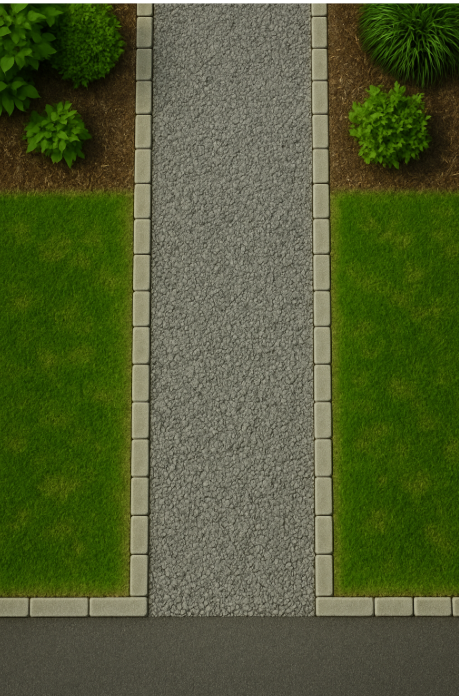
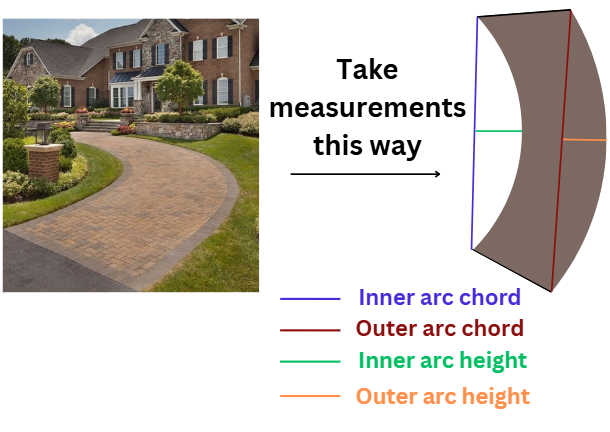
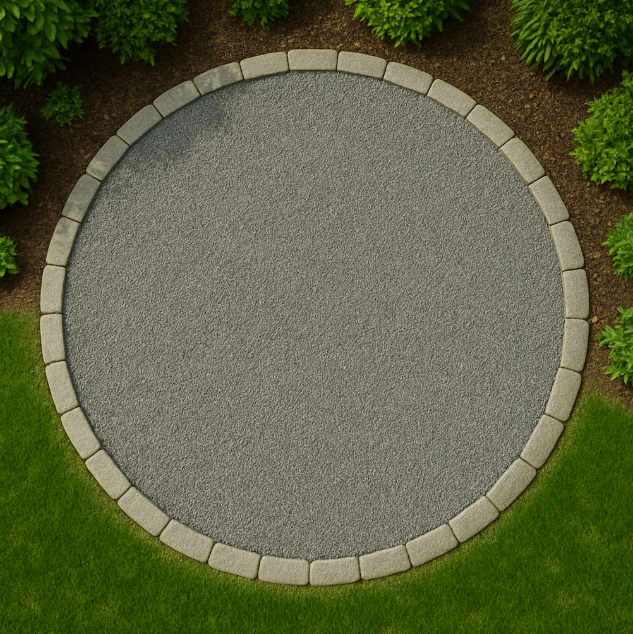
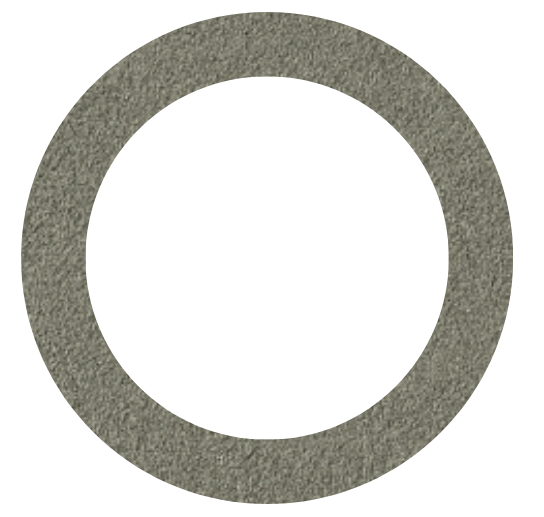
Enter the required inputs in the units of your convenience and the calculator will automatically calculate the total volume of gravel needed and the estimated weight of 3/4 gravel required based on typical density values. You can change the density value for customized calculation. This calculator is ideal for homeowners, contractors, and landscapers working on driveways, drainage systems, walkways, patios, or base layers for construction projects.
What Is 3/4 Gravel?
3/4 inch gravel is a crushed stone aggregate where the majority of particles are approximately 3/4 inch in diameter. It is typically angular in shape, which allows it to compact well and lock into place. Most commonly made from limestone, granite, or trap rock, 3/4 gravel is widely used in construction and landscaping due to its drainage properties and load-bearing capacity.
Depending on the supplier, this product may also be labeled as 3/4 clean stone, 3/4 crushed rock, or simply crushed stone #67, depending on the grading system used.
How Is It Different from #57 Gravel?
| Property | #57 Gravel | 3/4 Inch Gravel |
|---|---|---|
| Size Range | Named gradation, about 1/2" to 1", very little dust | Quarry size name. Clean 3/4 is similar; 3/4 minus includes dust |
| Shape | Angular | Angular |
| Material Type | Crushed stone (granite, limestone, or trap rock) | Crushed stone (same as #57 gravel) |
| Common Uses | Driveways, drainage, concrete mix, French drains | Driveways, base for pavers, road base |
| Drainage Capability | Excellent (due to varied particle sizes) | Excellent |
| Compaction | Moderate (not ideal for compaction) | Good compaction when used with fines |
| Construction Use | Backfill, pipe bedding, concrete aggregate | Road base, foundation fill, trench backfill |
| Landscaping Use | Decorative beds, erosion control | Base material under hardscape, gravel paths |
| DOT/Highway Use | Widely accepted in DOT projects | Also used but depends on exact grading specs |
| Price (typically) | Slightly higher due to grading standards | Often similar in price; varies by region |
| Grading Standard | Follows ASTM C33 or AASHTO M43 (typically) | May or may not follow a specific standard |
| Availability | Common and standardized | Widely available but naming may vary regionally |
What Are the Uses of 3/4 Gravel?
3/4 gravel is widely used in construction, landscaping, and infrastructure. Common uses include:
- Driveway topping for stability and drainage
- Base layer for patios, pavers, and concrete slabs
- French drains and other subsurface drainage systems
- Backfill around foundations, posts, or retaining walls
- Road and highway base material
- Erosion control in sloped areas or near downspouts
- Decorative ground cover in low-traffic landscape areas
Its angular structure allows excellent interlocking and makes it suitable for both load-bearing and drainage applications.
3/4 Gravel Size, 3/4 Stone, and 3/4 Rock
People search “3/4 gravel size,” “3/4 stone,” and “3/4 rock” for the same pile: angular crushed stone about three quarters of an inch across. Hold a few pieces next to a tape. Clean 3/4 clusters between 1/2 inch and 1 inch, with the bulk near 3/4. You should not get a palm full of powder.
The name on the ticket matters more than the nickname:
- 3/4 clean or 3/4 washed has the dust screened out. It drains. It is the product this calculator’s 1,600 kg/m³ default describes.
- 3/4 minus keeps the dust. It compacts. Treat it like crusher run, not like drain rock, and raise the density.
- #57 is the specified 1/2 to 1 inch clean stone. Many yards sell it when you ask for 3/4 clean. Use the #57 stone calculator when the ticket says No. 57.
- #67 runs from 3/4 inch down to about 3/16 inch. It locks a little better and drains a little less.
- #8 or 3/8 inch is the smaller clean neighbor. 1 inch to 1-1/2 inch drain rock is the larger one.
Weight of 3/4 Stone per Yard
Clean 3/4 has the same open voids as other washed crushed stone, so the weight follows quarry density sheets for that product, not a single lab number. Rock type and moisture move it. Use the figure on your supplier’s sheet when you have one. The tons below are US short tons (2,000 lb). Tonnes are 1,000 kg.
| Product | Tonnes per m³ | US tons per yd³ | Notes |
|---|---|---|---|
| Clean limestone 3/4 | 1.50–1.65 | 1.26–1.39 | Light end. Calculator default is 1.60 tonnes/m³ and 1.35 tons/yd³. |
| Clean granite or trap 3/4 | 1.60–1.80 | 1.35–1.52 | Still a drain stone. Heavier rock, same size. |
| 3/4 minus, compacted | 1.80–2.00 | 1.52–1.69 | Dust fills the voids. Do not order this with the clean-stone default. |
The calculator’s “t” menu is metric tonnes from the same kilograms. The tons line under the result is US short tons. One hundred pounds per cubic foot is about 1,600 kg/m³, which is why that round number shows up on so many tickets.
3/4 Stone Coverage and Dump-Truck Loads
Cubic yards = length (ft) × width (ft) × depth (in) ÷ 324. The table uses clean 3/4 at 1.35 tons per cubic yard. A 14-ton tandem is the middle of a typical 12–16 ton dump truck. A trench is a volume, so the 12 inch row is not a surface coverage rate.
| Area | Depth | Cubic yards | Cubic meters | Tons | 14-ton trucks |
|---|---|---|---|---|---|
| 4×20 ft walk | 2 in | 0.49 | 0.38 | 0.67 | part of 1 |
| 4×20 ft walk | 3 in | 0.74 | 0.57 | 1.00 | part of 1 |
| 10×12 ft patio | 4 in | 1.48 | 1.13 | 2.00 | part of 1 |
| 3×30 ft drain trench | 12 in | 3.33 | 2.55 | 4.49 | part of 1 |
| 16×24 ft drive | 3 in | 3.56 | 2.72 | 4.79 | part of 1 |
| 24×24 ft court | 4 in | 7.11 | 5.44 | 9.59 | 1 |
Worked Example: a 40 ft French Drain
A trench 18 inches wide, 40 feet long, and 12 inches deep, filled with clean 3/4:
- Volume = 1.5 ft × 40 ft × 1 ft = 60 ft³
- Cubic yards = 60 ÷ 27 = 2.22 yd³
- Cubic meters = 2.22 × 0.765 = 1.70 m³
- US tons at 1.35 tons/yd³ = 3.00 tons
- Tonnes at 1.60 tonnes/m³ = 2.72 tonnes
- 0.5 ft³ bags = 60 ÷ 0.5 = 120 bags
Three tons is a partial landscape-truck load, or about 120 bags if you cannot get a delivery. A 12×40 ft driveway at 4 inches of the same clean stone is a different job: 5.93 cubic yards and 7.99 tons, one tandem. Use 3/4 minus or 304 only for the packed base under that driveway, not for the trench.
3/4 Crushed Stone Material Guide
Size. Nominal 3/4 inch. Clean stone is a narrow band around that size. Minus stone is a full mix from 3/4 inch to dust. Neither one is a bag of identical cubes.
What it is made of. Limestone, granite, or trap rock, crushed and screened. The angular faces are what let clean 3/4 sit without rolling the way pea gravel does. Color follows the quarry, not the size.
Best uses. Clean 3/4 for French drains, wall backfill, the open course under a slab, and a loose driveway top over a compacted base. Two to three inches is a typical top course. Four inches is common under pavers when a separate packed base is already in place. 3/4 minus is for the packed base itself.
Do not use clean 3/4 where you need a hard, dust-bound driveway, a comfortable barefoot path, or a playground. It will not compact, and the edges are sharp. Do not use 3/4 minus in a drain. For a specified No. 57, use the #57 calculator. For a Midwest class 5 driveway surface, use the class 5 calculator. Pea gravel is the rounded neighbor for walking surfaces.
Where Not to Use 3/4 Gravel
Despite its versatility, 3/4 gravel is not ideal in every situation:
- Not suitable as a finish layer for high-traffic pedestrian paths (can be uncomfortable to walk on)
- Avoid using in playgrounds or recreational surfaces where cushioning is needed
- Poor choice for tight compaction needs (such as under asphalt or fine grading) unless mixed with smaller fines
- Not suitable for mortar mix – use sand and specific aggregate types instead
Always consider the project requirement, compaction need, and comfort level before choosing 3/4 gravel.
3/4 Gravel, 3/4 Stone, and 3/4 Rock Questions
What is 3/4 gravel size?
3/4 gravel is crushed stone whose largest pieces are about 3/4 inch. Clean or washed 3/4 is mostly 1/2 inch to 1 inch with almost no dust. 3/4 minus, sometimes called 3/4 crusher, includes everything from 3/4 inch down to stone dust and is a compactable base, not a drain rock. Measure a few pieces: if they cluster around 3/4 inch and your hand does not fill with powder, you have the clean size.
Is 3/4 gravel the same as 3/4 stone or 3/4 rock?
Yes. 3/4 gravel, 3/4 stone, 3/4 rock, and 3/4 crushed stone are sales names for the same size. The ticket still has to say whether it is clean or minus. Clean drains. Minus packs. The rock may be limestone, granite, or trap rock.
How much does a cubic yard of 3/4 gravel weigh?
Clean 3/4 inch stone weighs about 1.35 to 1.5 US tons per cubic yard, or about 1.6 to 1.8 tonnes per cubic meter, the same band as #57. These calculators use 1,600 kg per cubic meter, which is 1.35 tons per cubic yard and 1.60 tonnes per cubic meter. 3/4 minus with dust is heavier once compacted, often closer to 1.5 to 1.7 tons per yard. Do not use the clean-stone default for a minus product.
How many tons of 3/4 stone are in a dump truck?
A small landscape truck often hauls about 5 to 7 tons of clean 3/4. A tandem is commonly about 12 to 16 tons, about 9 to 12 cubic yards at 1.35 tons per yard. A tri-axle can be about 16 to 22 tons. 3/4 minus weighs more per yard, so the same truck carries fewer yards. Ask the hauler for the payload.
Is 3/4 gravel the same as #57?
Clean 3/4 and #57 are often interchangeable: both are angular, mostly 1/2 to 1 inch, and both drain. #57 is a named gradation with a sieve band. 3/4 is a quarry size name and can be a tighter pile of 3/4 inch chips. 3/4 minus is not #57, because it contains dust. #67 is the in-between grade, 3/4 inch down to about 3/16 inch.
How much area does one ton of 3/4 gravel cover?
At 1.35 tons per cubic yard, one ton of clean 3/4 covers about 120 square feet at 2 inches, about 80 square feet at 3 inches, and about 60 square feet at 4 inches. A driveway topping is often 2 to 3 inches over a compacted base. A French drain is figured by the trench volume, not by a thin coverage rate.
Can I use 3/4 gravel for drainage?
Clean 3/4 and washed 3/4 are drainage stone. Use them in French drains, behind retaining walls, and as the open layer under a slab. 3/4 minus will clog. If the pile looks gray with dust, it is the wrong 3/4 for a drain.