How to Use These 304 Gravel Calculators?
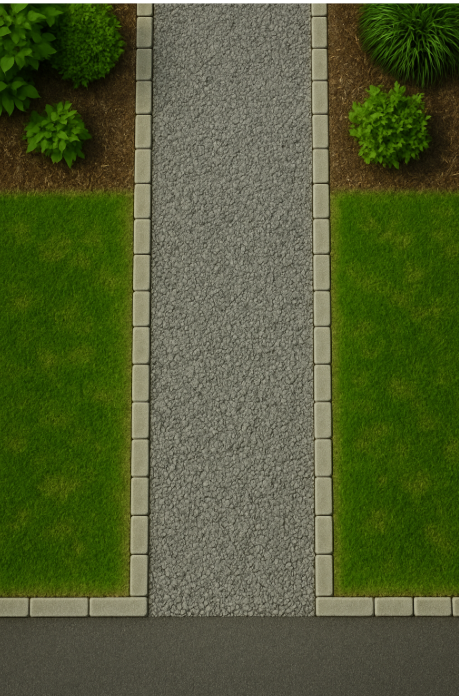
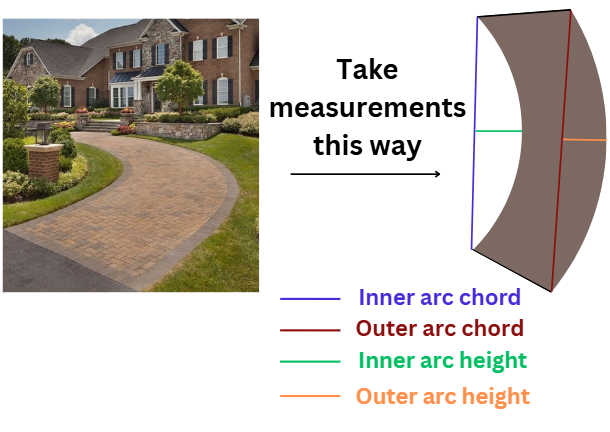
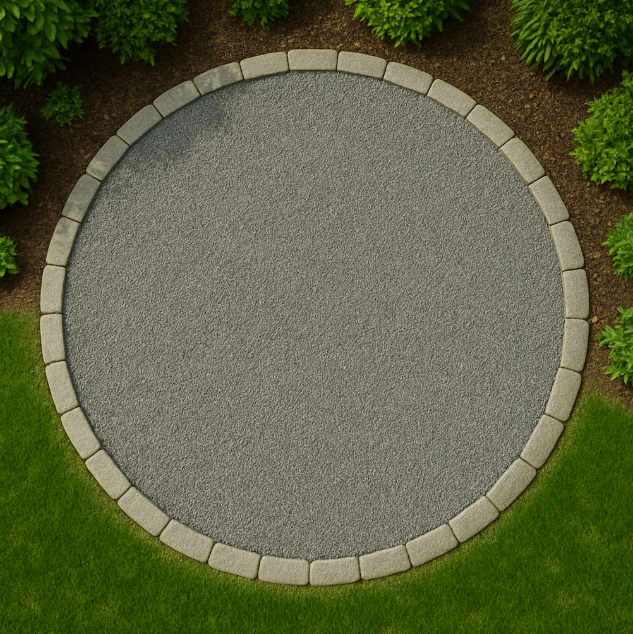
Start by taking the relevant measurements and entering them into the appropriate calculator. Each tool computes area × depth to get volume, then applies density to get weight.
For multi-section projects, sum each area’s result and add 5–10% extra for compaction and leveling.
What is 304 Gravel?
304 gravel is a dense-graded aggregate base: crushed rock from about 1 inch or 1-1/2 inches down through sand and stone dust. Crews in Ohio and nearby states usually buy it as 304 limestone. The dust is the point. When you compact it, the fines fill the gaps and the layer becomes a hard platform under asphalt, concrete, pavers, or a gravel driveway.
It is not clean stone. #57 and washed 3/4 gravel are open so water can pass. 304 is the opposite. If a supplier ticket says crusher run, 411, ABC, or class 5, you are looking at the same kind of job with a different local name and a different default weight.
304 Weight per Cubic Yard and per Cubic Meter
These ranges match the bands on typical supplier density sheets for dense-graded limestone base. They are planning numbers, not a lab report for one quarry. A wet load or a heavily compacted lift weighs more. The earlier version of this table labeled metric tonnes per cubic yard as US tons. The tons column below is 2,000 lb tons.
| Condition | kg/m³ | Tonnes per m³ | US tons per yd³ |
|---|---|---|---|
| Loose, as delivered | 1,750–1,850 | 1.75–1.85 | 1.47–1.56 |
| Compacted | 1,900–2,000 | 1.90–2.00 | 1.60–1.69 |
| Calculator default | 1,920 | 1.92 | 1.62 |
The “t” menu on each calculator is metric tonnes. The tons line under the result is US short tons from the same kilograms. If you are ordering loose stone to finish at a compacted depth, add about 10 percent. The calculator does not add it.
304 Coverage and Dump-Truck Loads
Cubic yards = length (ft) × width (ft) × depth (in) ÷ 324. Tons use 1.62 tons per cubic yard, the 1,920 kg/m³ default. Truck counts use a 14-ton tandem. These depths are finished thickness, so a real order is often about 10 percent higher.
| Area | Depth | Cubic yards | Cubic meters | Tons | 14-ton trucks |
|---|---|---|---|---|---|
| 10×10 ft shed pad | 4 in | 1.23 | 0.94 | 2.0 | part of 1 |
| 10×10 ft shed pad | 6 in | 1.85 | 1.42 | 3.0 | part of 1 |
| 12×24 ft garage | 6 in | 5.33 | 4.08 | 8.63 | 1 |
| 12×40 ft driveway | 6 in | 8.89 | 6.80 | 14.38 | 2 |
| 20×40 ft parking | 8 in | 19.75 | 15.10 | 31.96 | 3 |
Worked Example: 12×40 ft Driveway Base
A 12 by 40 foot driveway with 6 inches of compacted 304:
- Cubic yards = 12 × 40 × 6 ÷ 324 = 8.89 yd³
- Cubic meters = 8.89 × 0.765 = 6.80 m³
- US tons at 1,920 kg/m³ = 14.38 tons
- Tonnes at 1.92 tonnes/m³ = 13.05 tonnes
- 0.5 ft³ bags = 240 ft³ ÷ 0.5 = 480 bags. Buy this by the truck.
14.38 tons is just over a 14-ton tandem, so plan on two loads or one tri-axle. Add about 10 percent (roughly 16 tons) when the quoted depth is after compaction and the quarry sells loose 304. Spread it in 2 to 3 inch lifts and compact each lift. The calculators report 14.38 tons and do not add the compaction allowance.
304 Material Guide
Size. A typical 304 blend tops out around 1 inch or 1-1/2 inches and keeps every smaller size, including dust. You should not be able to see daylight through a handful the way you can with #57.
What it is made of. Most 304 in this region is crushed limestone, sometimes dolomite. Where the quarry is granite, slag, or recycled concrete, the ticket should say so. Recycled 304 can include a little brick or asphalt. Ask if the job spec wants virgin stone.
Best uses. The base under a gravel or asphalt driveway, a garage or shed pad, the compacted layer under pavers, a temporary haul road, and backfill where you want the soil to stay put rather than drain. Four to six inches covers most residential bases.
Do not use it in a French drain, around a perforated pipe, as a decorative surface, or as a barefoot path. Left as the finished driveway it dusts in dry weather and smears in the wet. Cap it with clean #57 or 3/4 stone if the surface has to stay open.
| Neighbor | How it differs from 304 |
|---|---|
| #57 and clean 3/4 | No dust. Drains. Will not compact into a base. Lighter, about 1.35–1.5 tons per yard. |
| Crusher run | Same idea, quarry nickname. Check the top size. Some crusher run is 3/4 minus, which is finer than many 304s. |
| 411 | Tennessee’s usual dense-graded base. Same job, local gradation. Do not assume the Ohio 1.62 ton default. |
| Class 5 | Upper-Midwest driveway and road base. This site’s class 5 calculator uses a heavier 2,400 kg/m³ planning density. |
Common Uses of 304 Gravel
- Base layer under driveways and roads
- Foundation support for sheds, patios, garages
- Sub-base for pavers and walkways
- Backfill around retaining walls
- Under concrete slabs and footings
- Temporary construction access roads
Advantages of 304 Gravel
- Compacts tightly for a stable base
- Supports heavy loads like vehicles and slabs
- Minimizes settling over time
- Affordable and readily available
- Suitable for a wide range of applications
Tips Before Ordering
- Measure accurately in feet or meters
- Add 5–10% extra for compaction and grading
- Install in layers and compact each layer
- Use with clean stone if a smooth finish is needed
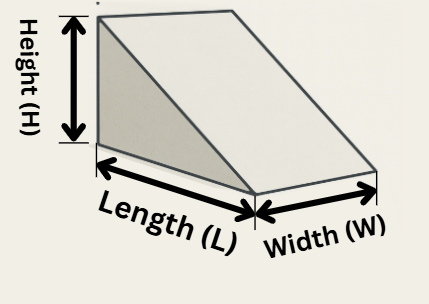
- Order in tons if that’s how your supplier prices materials. For angled sections, break them into triangles and use the triangle gravel calculator for volume and weight estimation.
304 Gravel Questions
What is 304 gravel?
304 gravel is a dense-graded base rock, often sold as 304 limestone in Ohio and nearby states. It blends stones up to about 1 or 1-1/2 inches with smaller chips, sand, and stone dust so the layer compacts into a hard base. It is a base product, not a clean drain stone like #57.
How much does a cubic yard of 304 gravel weigh?
Compacted 304 is commonly about 1.6 to 1.7 US tons per cubic yard, roughly 3,200 to 3,400 pounds, or about 1.9 to 2.0 tonnes per cubic meter. Loose stone before it is packed is lighter, often near 1.5 to 1.6 tons per yard. This page’s calculators use 1,920 kg per cubic meter, which is 1.92 tonnes per cubic meter and about 1.62 tons per cubic yard.
Is 304 gravel the same as crusher run?
They do the same job. Crusher run is the everyday name for crushed stone that still contains its dust. 304 is the spec-style name used around Ohio for that kind of dense-graded aggregate base, usually limestone. Class 5 is the similar product in Minnesota and nearby states, and 411 is a common name in Tennessee. Gradation and weight are not identical from state to state, so order by the name on the local ticket.
How many tons of 304 are in a dump truck?
Because 304 is heavier than clean #57, the same truck carries fewer yards. A small landscape truck is often about 5 to 7 tons. A tandem is commonly about 12 to 16 tons, which is roughly 7 to 10 cubic yards at 1.62 tons per yard. A tri-axle can be about 16 to 22 tons. Confirm the payload with the hauler.
Can I use 304 gravel for drainage?
No. The fines that make 304 compact also plug the voids, so water does not move through it the way it moves through #57 or clean 3/4 stone. Use 304 under a driveway, slab, or paver base. Use clean stone in a French drain.
How deep should a 304 gravel driveway base be?
Four to six inches of compacted 304 is a typical residential driveway or shed base. Go six to eight inches for heavier vehicles, and place it in lifts of about 2 to 3 inches so each lift can be compacted. Order about 10 percent extra when you are buying loose stone for a finished compacted depth.
Is 304 limestone different from 304 gravel?
304 limestone is 304 made from crushed limestone, which is the usual rock in the Ohio Valley. The name describes the gradation and the job, a compactable base, more than a single quarry’s recipe. Granite or slag versions exist where that is the local rock.